
Polyaspartic
Fast-setting floors for a garage you need back
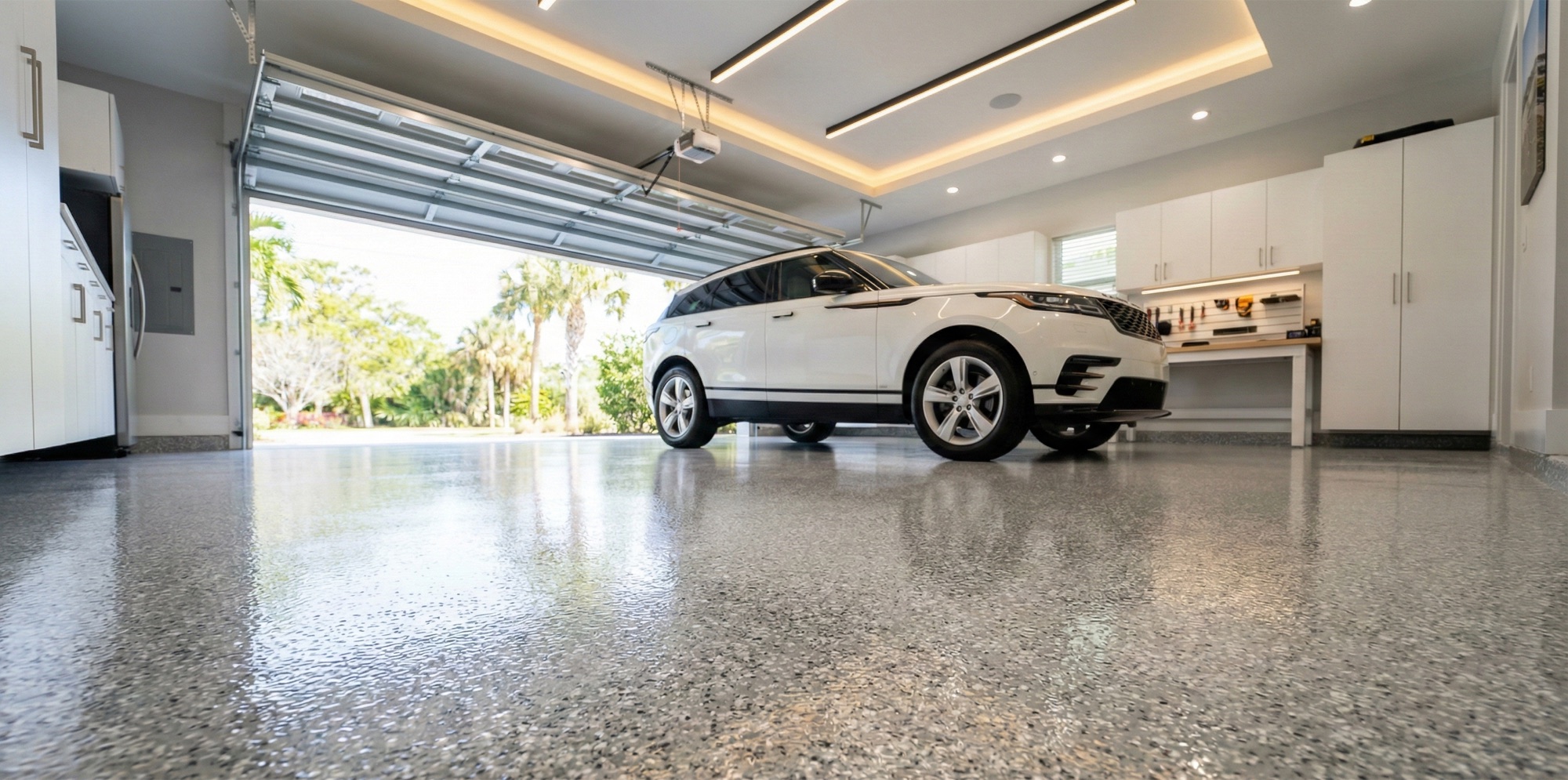
Polyaspartic sets in hours instead of days, and it keeps its color where an open garage door lets the afternoon in. On most garages it is the clear over a flake base. It is quick to cure and slow to forgive, so our crew lays it in measured batches. You get your walk-on and park-on dates before anything is ground.
How long can the garage be shut?
Tell us the garage, how many cars use it and roughly how big it is. Or call (941) 504-9132.
Schedule
Two cars and one garage
When a house has one garage and two cars, a floor that keeps that garage shut for most of a week means a car on the street, a freezer you cannot reach and a workbench under a tarp.
That is the case for polyaspartic. It sets in hours rather than days, so the gap between the last coat and the first footstep gets shorter, and the car comes home sooner. How much sooner depends on the build under the clear, the thickness, and how wet the air is that week. Afternoon storms and high humidity both slow a cure here, and we would rather hand you real dates than a round number that falls apart on day two.
So nobody on our crew says “one day” before seeing the slab. We read the concrete, take a moisture reading, decide the build, and then give you two dates: when you can walk on it, and when the car goes back in. If the weather shifts either one, you hear it from us before the crew sets out. Bradenton is fifteen minutes from the shop, and same-week scheduling is normal here, so the wait is usually for the right weather, not for us.
Where the sun comes in under the door
A west-facing garage with the door rolled up takes the low afternoon sun straight across the first stretch of floor, day after day.
Indoors, nobody worries about ultraviolet light. A garage with the door open half the day is not really indoors, and the floor near the door knows it.
The strip that turns first
On a standard epoxy floor, that band nearest the door is where trouble shows first. Epoxy ambers in sunlight, so the strip by the door drifts yellow while the back of the garage stays the gray you picked. It creeps in slowly enough that you miss it for a while, then you cannot stop seeing it. Polyaspartic is UV stable. A gray holds as gray, a white stays white, and the floor reads as one color from the door line to the back wall.
The clear is what the sun hits
On most garages we lay flake into the base coat and finish with a polyaspartic clear, so the color underneath sits behind a coat that does not yellow. You can compare our eighteen flake blends on your own slab, with the door up the way it usually is, and pick in the light the floor will actually live in.
Grip at the threshold
A clear over flake has a little texture from the chips. If rain blows in at the door, or the hose gets used inside after a beach day, we can add a fine texture to the topcoat across that first stretch so wet feet and wet tires have something to hold.
Batches
Short working time, so the floor goes down in sections
Polyaspartic is unforgiving to put down. Once it is mixed the clock is running, and a batch that sits too long in the bucket, or gets spread too thin, starts to set before it has leveled. That is why it is no weekend product, and why some crews quietly steer people back to epoxy.
We size each mix to the area one person can roll out cleanly before it turns, then work the floor in planned sections and keep a wet edge, so there are no lap lines where one batch meets the next. The order is settled before a can is opened: start at the back wall, work toward the door, and finish where the crew can step out without walking through fresh coat.
Everything under it gets the same care as any floor we do. The slab is diamond ground with the dust pulled into a vacuum instead of left on your shelves. Cracks get chased and filled. Then the moisture reading, because vapor climbs through Florida concrete from the sand beneath it all year, and a fast coat sealed over a damp slab blisters just like a slow one.
Attention to detail and cleanliness are what we would want from a crew in our own garage. Your things go back onto a clean floor, not a dusty one.
Rods, coolers and the sand that comes back with them
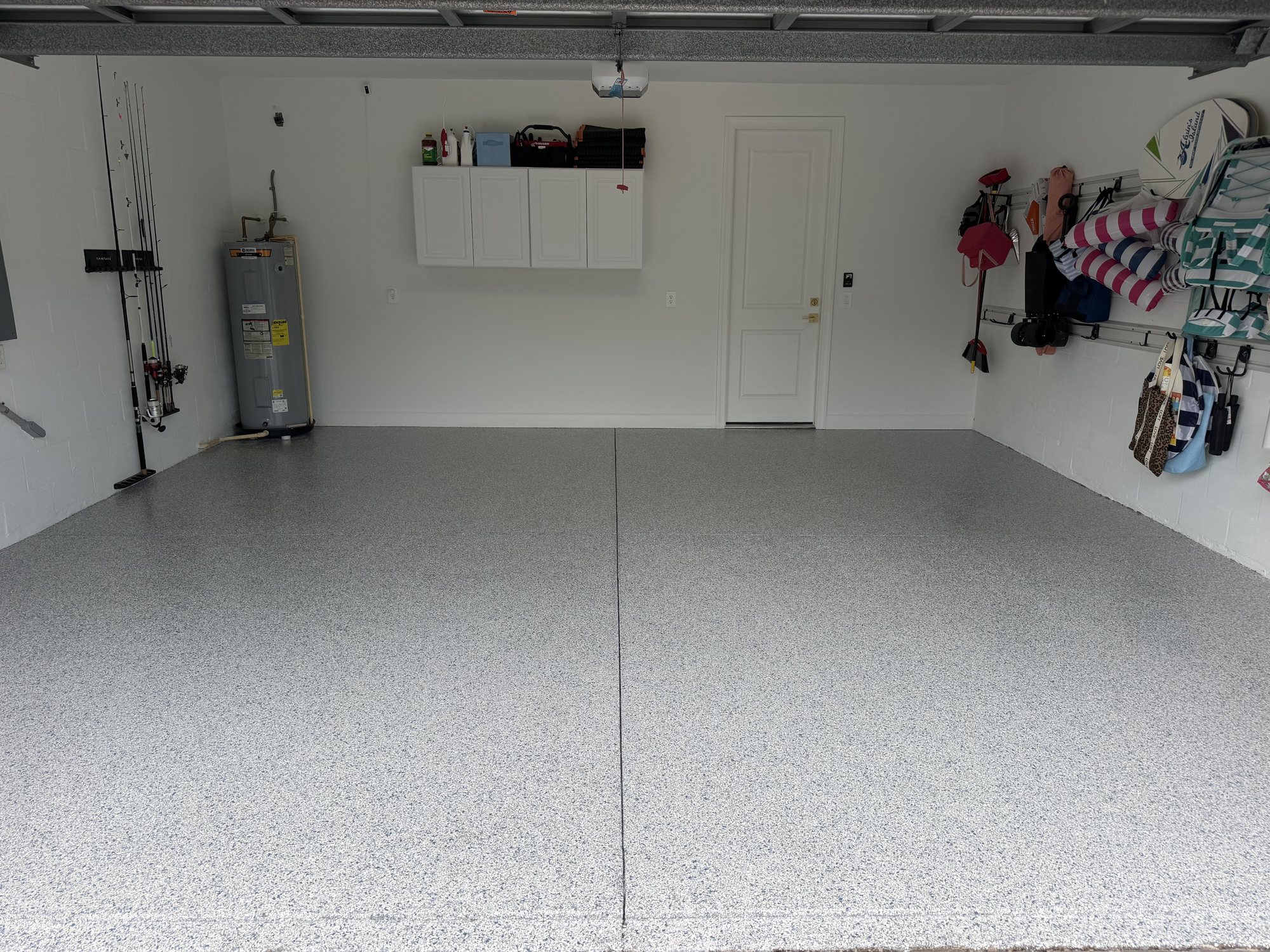
A lot of garages around here double as the gear room. Rods on the wall, a tackle box on the bench, coolers stacked by the door, chairs and floats hung on whatever hook is free. All of it comes back in carrying sand and salt water, and most of it gets set straight down on the floor.
- Sweep sand out often, so it is never ground into the clear under a cooler being dragged across it.
- Rinse a cooler drip or a leaking bait bucket with water and a neutral cleaner before it dries on.
- Hang rods, chairs and floats off the floor where you can, so the floor gets swept instead of worked around.
- Set a mat under anything with a sharp metal foot, like a tackle cart or a folding table.
Sand wears a garage floor here more than the car ever will.
A full flake broadcast helps more than people expect. The speckle hides a day’s worth of sand between sweeps, and scuffs from a dragged cooler stay in the clear. A worn clear can be sanded and recoated years later without touching the flake underneath, so the color you picked is still the color you have.
Epoxy still has a job underneath
Polyaspartic and epoxy are partners on most garage floors. The common build is an epoxy primer and base for bond and thickness, flake broadcast into it, then the polyaspartic clear on top for speed, hardness and color that holds. Where a slab moves more, the base changes, and the polyurea page explains why.
Polyurea Floor Coatings
A flexible base for slabs that move.
What goes under it →Concrete Crack Repair
Chased, filled and ground flush first.
How we fix them →UV-Resistant Outdoor Floor Coatings
Lanais and entries in full sun.
Out in the sun →Pool Deck Resurfacing
Old decks repaired, then recoated for wet feet.
Around the pool →Polyaspartic Floor Coatings
How the system works, in every county we cover.
The full system →All of our Bradenton work · Manatee County towns · Garages in the gallery · Reach the crew
What people ask about a fast floor
Can I really park on it the next day?
Usually not the next day, and never on a promise made before we have seen the slab. Polyaspartic sets in hours, but the base under it, the thickness and the humidity that week all count. We give you a walk-on date and a park-on date for your garage, and we only move them if the weather makes us.
Why does the floor near my garage door look yellow?
That is ultraviolet light working on an epoxy topcoat. The strip nearest the door gets the most sun, so it ambers first while the back of the garage stays the color you picked. Grinding the old coat off and finishing with a polyaspartic clear stops it happening again, because polyaspartic holds its color in sunlight.
Is polyaspartic something I can roll on myself?
We would steer you away from it. It sets fast, so mixing too much at once or rolling too slowly leaves lap lines and thin spots that are hard to fix afterwards. On top of that, the grind and the moisture reading underneath decide whether any coating holds, and both need equipment most garages do not have.
Do I need to empty the whole garage?
Everything that sits on the floor has to come out, from the cars to the tackle boxes, because the grinder and the coating run wall to wall. Rods, chairs and cabinets hung on the walls can usually stay put. Tell us about anything heavy early, so moving it fits into the schedule instead of holding it up.
Which flake colors look best by an open door?
The polyaspartic clear is what keeps a color from yellowing, so the choice comes down to looks and upkeep. Mixed gray blends hide sand and tire marks far better than a solid dark floor. Roll the door up when you compare the eighteen flake blends on your slab, so you judge them in the light they will live in.
Can you coat over the epoxy I already have?
Not as it is. A new clear laid over an old coat is only stuck to that coat, and if the old one is yellowing or lifting it takes the new one with it. We grind the old coating off down to sound concrete, repair what we find, and build the floor again from the primer up.
Pick the week the garage can sit empty.
Send one picture of the floor and a rough size, and we can name the system and tell you which day you walk on it and which day the car goes back in. Shoot it with the door open if the floor gets afternoon sun, and get the strip by the door in frame if an old coat has started to turn. You do not have to come to a showroom, and nobody chases you after.
Ask the installer
Or call (941) 504-9132.