
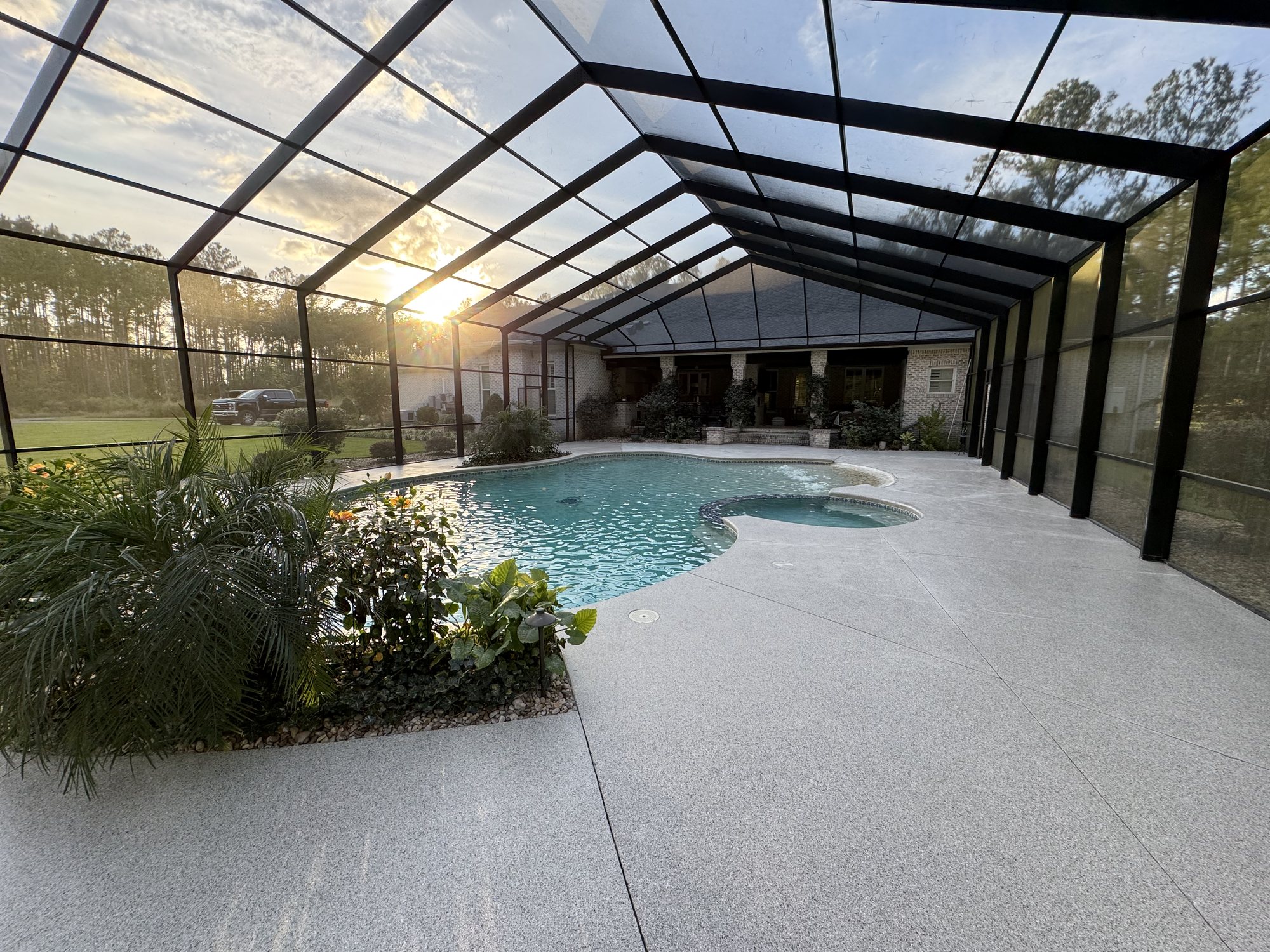
Patio
A patio floor that keeps its grip when the pool splashes
Out back sits the screened pool patio. Out front is the covered slab everyone crosses to reach the door. Both stay wet far more often than any floor inside, and both catch light that would turn an indoor resin yellow. We finish them in polyaspartic or polyurea with texture rolled into the top layer, over concrete we have ground open and checked for moisture first.
Pool patio or front entry?
Tell us which slab it is and about how big. Or call (941) 504-9132.
Sunlight
Why the patio gets a different resin than the garage
Ordinary epoxy belongs indoors, and a patio is the first place that proves it.
Ultraviolet light attacks standard epoxy at the surface. It ambers and chalks, and the gloss that looked wet on the first day goes cloudy. Wet epoxy is slippery as well, which is the last quality you want next to a pool. Every outdoor floor we put down therefore finishes in polyaspartic or polyurea. Both keep their color in direct light, both cure to a hard surface, and both hold a grip texture well.
A screen enclosure helps, though less than most people expect. The mesh softens glare, yet the deck still takes hours of sun, most of all along the open side. Anna Maria Island properties are coastal and salt-exposed too, so salt settles on a patio every breezy afternoon. A sealed surface keeps it on top, where a hose clears it. Bare concrete drinks it in.
Under that top layer, the base depends on the slab and the look you are after. Flake is the usual choice beside a pool, because the chips break up footprints, leaf litter and dried splash marks between rinses.
Grip you can feel with wet bare feet
Texture goes into the last coat on purpose, and you decide how much before it does.
Where the texture comes from
A fine aggregate is spread into the final clear while it is still wet, then back-rolled so it lies evenly across the slab. Underfoot it reads as a light tooth, enough to stop a dripping heel from sliding. It stays easy to clean, because it is fine enough that dirt has nowhere to settle.
Pool side and front door
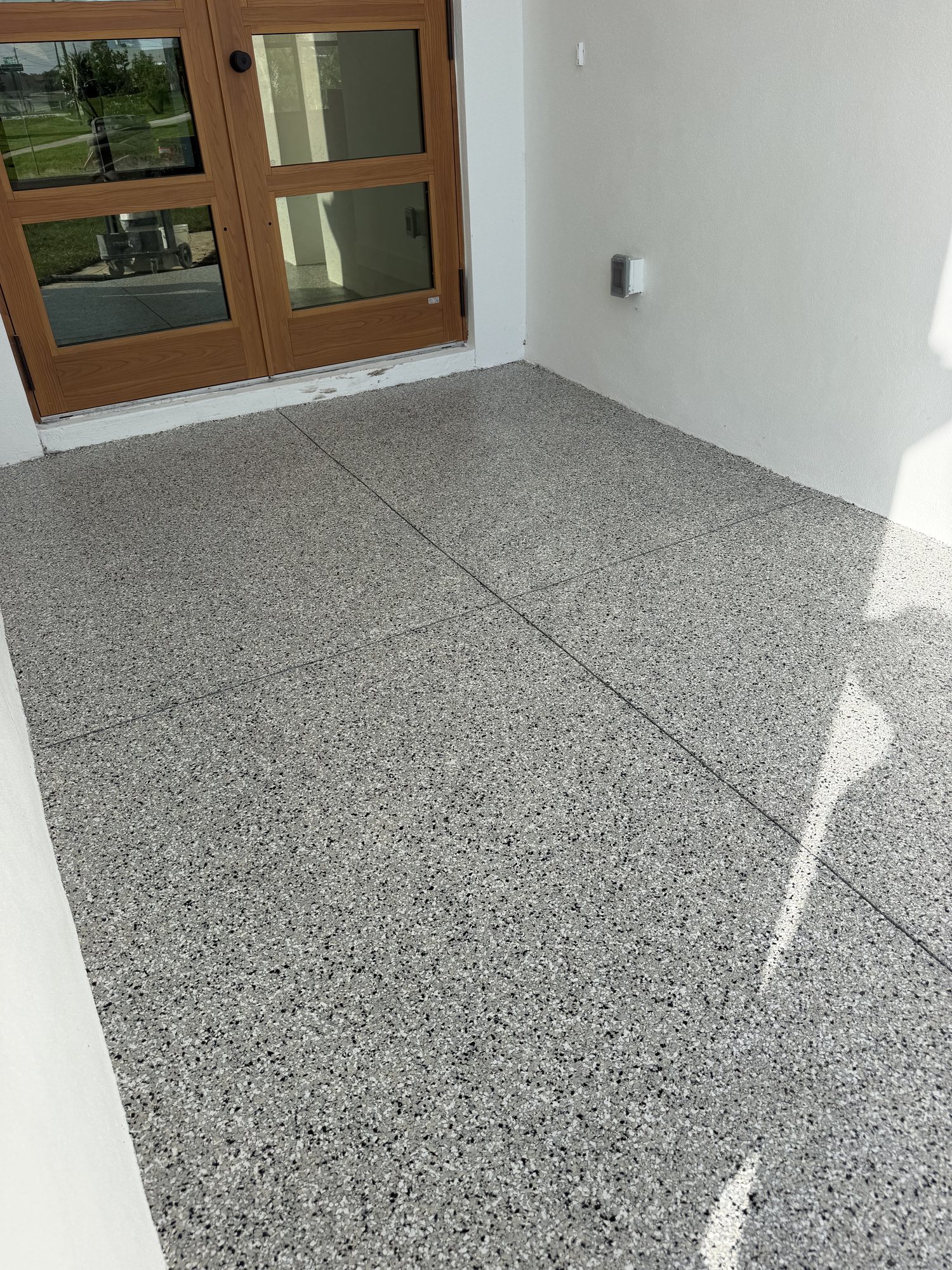
Next to the pool, where people step out soaked, we lean toward more grip. A covered entry slab like the one in this photo sees rain blowing under the roof and wet shoes coming home, so it gets texture as well, usually a touch lighter. That gray, white and black blend sits well against white stucco and wood-framed doors.
Keeping it clean
A soft brush and a garden hose handle most of it. A pressure washer is fine if you keep the wand moving and hold it back from the surface, since a tight jet held in one spot can scuff the texture.
Joints
Saw cuts, and what happens to them
Every patio has control joints. Those are the straight cuts the concrete crew made so the slab would crack along a line of their choosing, and they keep working long after we pack up. The slab grows a little in the midday heat and shrinks back overnight, and the joints open and close with it. We handle them in one of two ways, and a stray crack gets its own treatment:
- Coat into the joint. We clean it out, dress its edges with the grinder and carry the base down inside the cut, so the line stays visible and the finish follows it.
- Fill and coat over. A flexible filler goes in first for a smoother look, with the understanding that a fine line may show later where the slab moves.
- Treat a stray crack separately. One that wanders away from a joint was never planned, so it gets chased and filled during prep like any other crack.
The concrete crew already chose where this slab would move. We work with their lines.
Joints with chipped, crumbling edges get rebuilt during prep, before any color goes down, and the full sequence is laid out on our surface preparation page for Anna Maria. Around a pool, that prep also includes the edge where the deck meets the coping, which gets cut in by hand.
Working between the afternoon storms
Outdoor resin needs a dry slab when it goes down and dry air until it skins over. A humid island afternoon does not always offer that, since clouds build quickly and rain can arrive with barely a warning.
A patio job gets planned around a window for that reason. Grinding and repairs tend to happen first, often early in the day. Coats go on when the concrete is dry to the touch and the forecast leaves enough hours for them to set. When the sky turns, the crew stops, protects what it can and comes back the next morning.
That can add a day to the schedule. A lost day costs far less than a coat that took rain while it was still soft, which would mean grinding it off and starting over.
You get your dates before the first pass of the grinder, and a phone call if they move. Bare feet are usually fine the day after the final coat. Patio furniture and a grill wait a little longer, and we tell you exactly how much longer once the system is chosen.
Where the patio meets the lanai and the garage
A patio is rarely the only slab we look at on a visit. If you want color under a screen, our outdoor epoxy flooring page for Anna Maria explains when a metallic or a decorative flake can live outside. The garage tends to go flake for the beach sand, which the Anna Maria garage floor page covers. Indoor concrete in good condition may only need the grind and seal or coating build described for island homes. Our main patio floor coatings page shows the outdoor systems we install across every county, and we coat patios in Holmes Beach and Bradenton Beach too.
Before you book a patio coating
Will the patio coating get hot under bare feet?
Color matters more than the resin here. Pale flake blends stay noticeably cooler in direct sun than dark ones, and a screened patio runs cooler than an open slab. If your pool patio catches sun all afternoon, we will point you toward the lighter end of our eighteen blends.
Can you coat over the old paint on my patio?
We take it off first. Paint and worn sealers come up with diamond tooling, because resin laid on top of them bonds only to that old layer, and when it peels the new floor peels with it. Grinding adds time to the job and keeps the coating attached to real concrete.
Is pool water hard on the coating?
Normal splashing is fine once the polyaspartic or polyurea top has cured. Hose the patio down now and then so chlorinated water and salt do not dry on the surface and leave a film. Concentrated pool chemicals that spill should be wiped up straight away, as on any finished floor.
How rough is the texture?
Enough to feel under a wet heel, and comfortable to walk on barefoot. We agree the amount with you before the final coat goes down. It can run heavier around the pool steps and lighter near the door, which is how a lot of homeowners end up wanting it.
Do the saw cuts disappear?
They can, if we fill them, though a hairline sometimes shows again where the slab keeps moving. Most patios we do keep the joints open and coated inside, which looks tidy and lets the concrete move along the lines it was cut for. We show you both on your slab.
How far ahead do I need to book?
Not far. Anna Maria is in Manatee County, inside the 120-mile radius we cover from Sarasota, and same-week scheduling is normal on the island. Outdoor work also has to suit the forecast, so we confirm the start a few days out and call you if a storm moves it.
Talk through your patio with the crew that coats it
Take one picture of the whole patio and one close to the surface, then tell us roughly how big it is and whether a pool sits beside it. Mention old paint, stains or cracks you already know about. We come back with the resin we would use outside, how much texture we would build in and how many days the space is closed. Prefer to talk it through? Call the shop and ask for the installer who would do the job.
Questions about grip or color?
Or call (941) 504-9132.