Commercial
Floors that pass inspection and keep working
Commercial work has a different brief to residential. It has to meet a standard, it has to survive traffic that never stops, and every hour the space is closed costs somebody money. We schedule around that.
Pour this floor
Tell us the space and rough size. Or call (941) 504-9132.
Detail
Specification comes first
Before anything else we establish what the floor has to do. Forklift traffic, chemical exposure, wash-down, static control, slip rating, and whether a health inspector is going to look at it. Those answers pick the system, not the other way round.
A retail showroom and a commercial kitchen both get called commercial epoxy and they are almost nothing alike in build.
Working around your hours
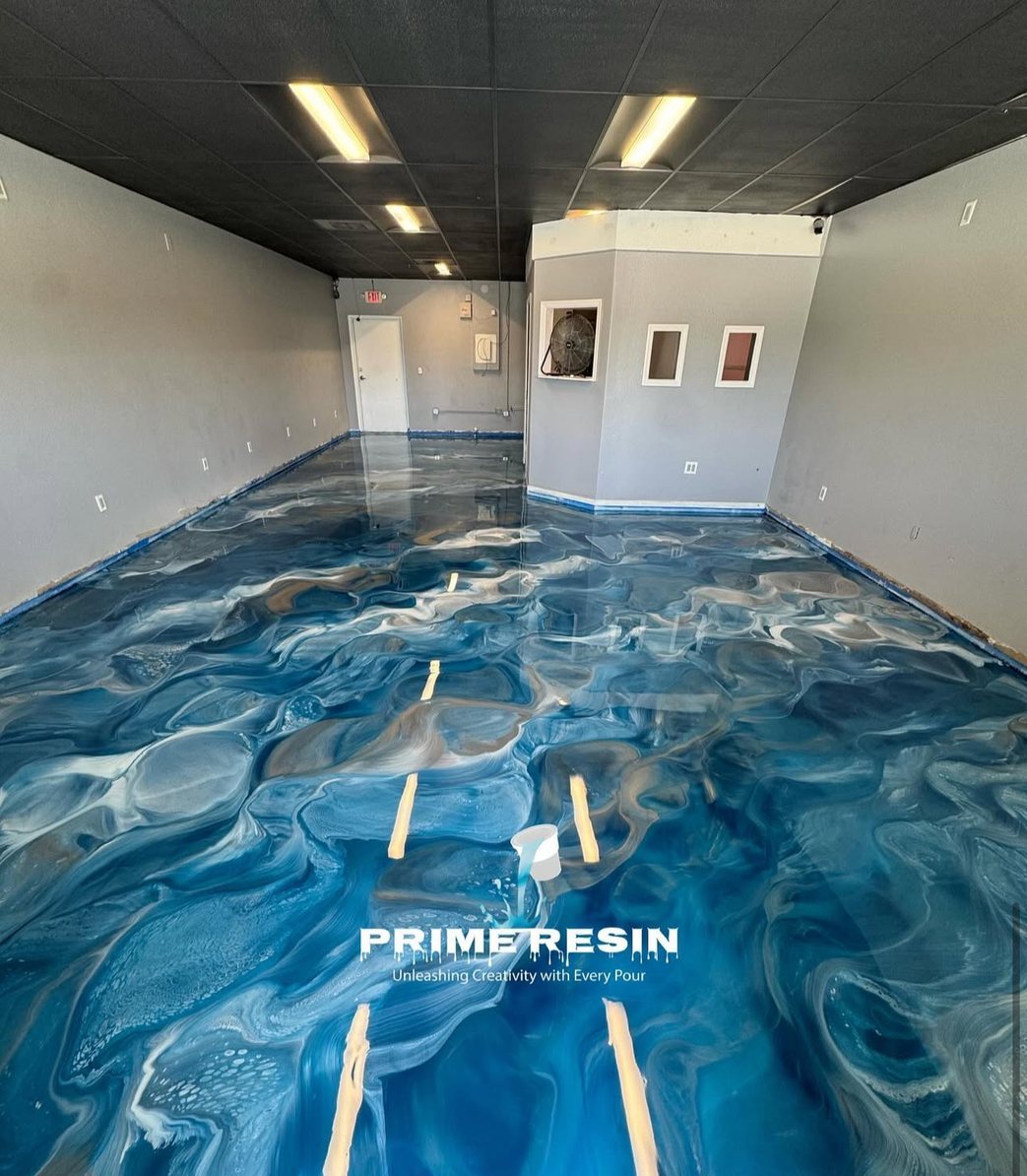
Most of our commercial jobs run nights and weekends. Polyaspartic topcoats are usually the answer because the cure window fits inside a closure, so you can open the following morning.
We phase larger floors so half the space stays in service while we work the other half. It takes longer overall and it keeps the doors open.
Documentation
We provide the system specification, product data sheets and cure schedules for your records. If your insurer, franchisor or health inspector wants to see what is on the floor, it is written down.
Preparation
What happens before any resin comes out
A commercial floor gets inspected, walked on all day and cleaned with things nobody would use at home, so the bond has to be right before anything else is discussed.
We diamond grind every floor. Progressively finer diamond tooling runs across the slab until the surface is opened to a profile the coating can key into mechanically, with the dust going into a vacuum rather than into the house. Acid etching, which is what most retail kits instruct, barely touches a hard-troweled slab.
Then we read moisture. Florida slabs sit on sand with a high water table and move vapor upward continuously; trap that under a film-forming coating and you get bubbling and delamination that can only be ground off and redone. Where the numbers come back high we specify a moisture-tolerant primer instead of pretending the problem is not there.
Cracks get chased out to a clean edge and filled rather than skimmed over, spalls and pop-outs get rebuilt, and any previous coating comes off entirely. Only when the slab is sound, open and dry does anything get mixed.
The finish is what you see. The grind underneath it is what decides whether you are still happy in year eight, and it is where we spend the time other quotes save money.
It is also why we will occasionally tell someone their slab needs repair before it needs a coating. A floor that should be fixed structurally is not a floor we will put resin on, because the crack comes back through and then it is our name on it.
Related work
Diamond Grinding
Everyone with a grinder says they diamond grind. What separates a floor that bonds from one that does not is which…
See the system →Concrete Surface Preparation
Surface preparation is not one method. It is a decision: what is on this slab, what is going on top of it, and…
How it works →Concrete Crack Repair
A crack filled with caulk and coated over reappears. Not maybe, and usually within the first year. Doing it properly…
Read the detail →Concrete Floor Repair
Cracks are lines. This is everything else: the crumbling patch by the garage door, the pitted area where something…
What it suits →Questions
Commercial Epoxy Flooring questions
How much does commercial epoxy flooring cost?
Price follows square footage, the condition of the slab and the system you choose. A sound slab that only needs grinding costs far less to prepare than one with cracks, old coating or a moisture problem. We look at the floor and give you a real number rather than a range that means nothing.
How long does commercial epoxy flooring take?
Most residential work is two to four days on site depending on size and system. Commercial and industrial floors are scheduled around your hours and often run nights or weekends. You get exact dates before we start, including when you can walk on it and when you can put weight on it.
Do you grind the floor first?
Always. Diamond grinding is the only way to get a profile the coating can key into, and it is the single biggest reason floors either last or fail. We do not acid etch and we do not coat over a sealed slab.
What about moisture in the slab?
Florida slabs move water upward constantly, and vapor trapped under a coating is a guaranteed failure. We take a reading before quoting. If the numbers are high we specify a moisture-tolerant primer rather than pretending the problem is not there.
Can you match a color or a look I have seen?
Usually. We carry eighteen flake blends and mix metallic per floor, so bring a photo, a cabinet door or a paint chip and we will get close. We put samples down in your own light before you commit.
Do you work outside Sarasota?
Yes. We cover a 120-mile radius from Sarasota, which is twenty-four counties from Naples up to Ocala and across to Orlando. Check the service areas page or call and ask.
Send us the space. We will send back a number.
Rough size and a photo is enough to start. We cover Sarasota and twenty-four counties around it, so tell us where you are and we will tell you when we can get there.
Pour this floor
Or call (941) 504-9132.